

Posidonia in Ibiza & Formentera: The Underwater Forest Beneath the Turquoise Water
From the deck, the water around Ibiza and Formentera is a gradient of blues and turquoise. Below the surface, there is a forest. The Posidonia meadows of Ibiza and Formentera shelter fish, octopus and cuttlefish, and they help keep the water as clear as it is, which surprises almost everyone who arrives.
In this guide we cover what Posidonia is, why it matters, what marine life you'll find among its meadows when you snorkel, and how to enjoy the sea without harming it.
What Is Posidonia in Ibiza and Formentera?
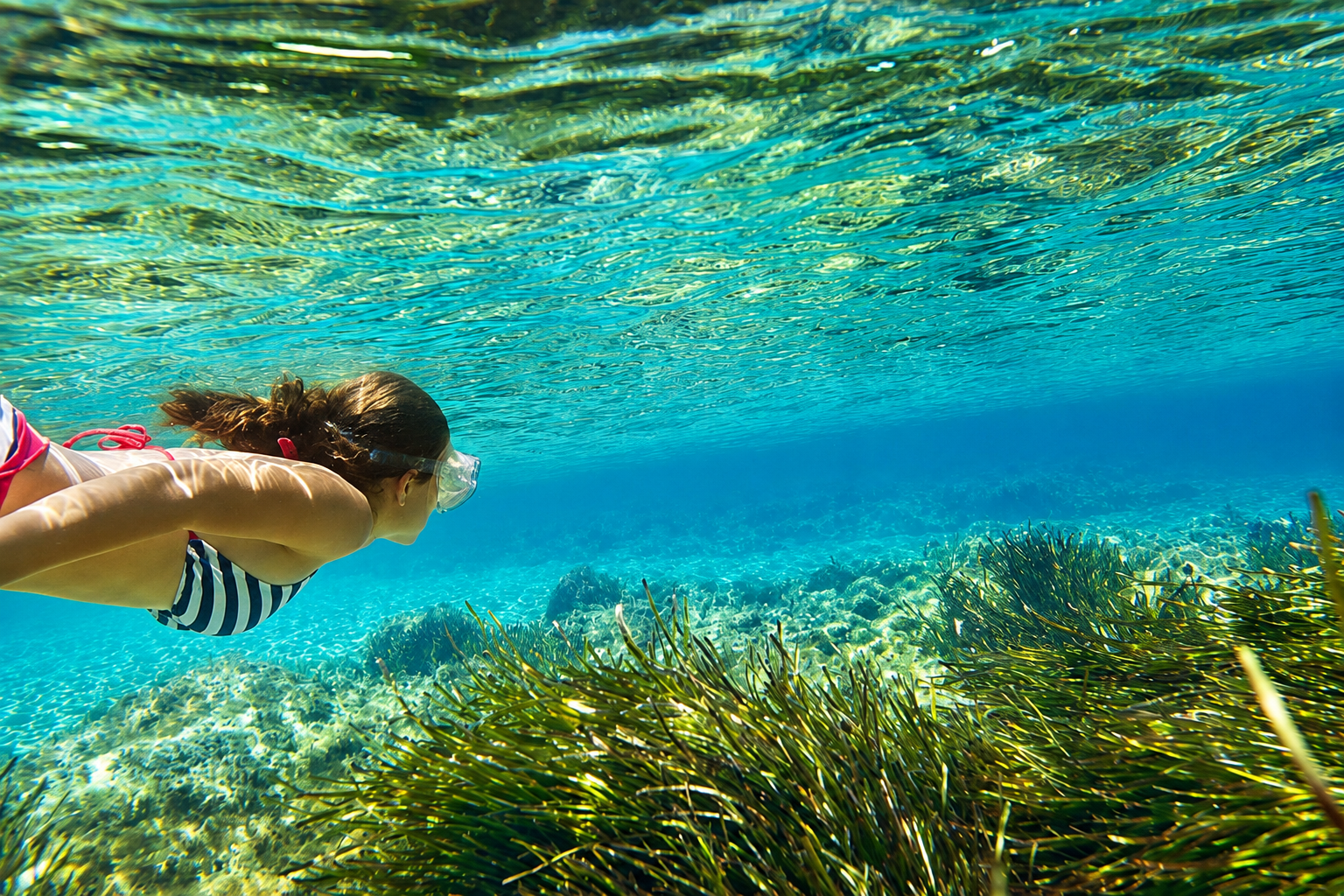
Posidonia oceanica, also known as Neptune grass, is often mistaken for seaweed. In fact, it is a flowering marine plant, endemic to the Mediterranean. It has roots, leaves, flowers and fruit, and it forms meadows that cover the seabed like a forest.
From the surface, it can look like a dark green patch on the sand. Underwater, it is a living ecosystem, and one of the reasons the Pityusic Islands (Ibiza and Formentera) look the way they do.
Why Posidonia Matters
Its meadows are part of the "Ibiza, Biodiversity and Culture" site, a UNESCO World Heritage Site. Their good state of conservation and their role as a habitat are two of the reasons behind that recognition.
Its importance goes far beyond the scenery:
- It shelters and feeds many organisms, and it is a nursery area where fish and invertebrates grow.
- It produces oxygen, like any plant that photosynthesizes.
- It stabilizes the seabed with its roots and rhizomes, and helps protect the coastline.
- It helps keep the water clear. Posidonia traps sediment on the seabed, which is one reason you can see the bottom through several meters of water over sand and seagrass.
So when you look down from the boat and see the sand through almost transparent turquoise water, you're seeing more than a beautiful view. You're seeing a living ecosystem.

Marine Life Among the Posidonia Meadows
The seabed around Ibiza and Formentera is constantly changing: pale sand, rocks, small caves and meadows. Each environment attracts different species, and the meadows are among the richest. Snorkeling, you might find:
- Salema: swim in groups over the meadows and are easy to spot by their golden stripes.
- White seabream and saddled seabream: the first hover around rocks, while the second prefer slightly more open water.
- Ornate and rainbow wrasse: bring color to the rocky areas.
- Octopus and cuttlefish: masters of camouflage. If you're patient, they're often much closer than you'd think.
You'll also see starfish on the sand and small invertebrates in the crevices. Snorkeling rewards those who look slowly, and often the best moments are the small details.

Where to Snorkel Near the Posidonia Meadows
There is no single perfect spot. It depends on the wind, sea conditions and visibility on the day. Some typical areas:
- Espalmador and Ses Illetes (Formentera): clear sand and shallow water, ideal for beginners.
- Cala Saona and Punta Rasa: a mix of rock and sand on the seabed.
- Es Caló: a quieter option when the wind favors other areas.
- Ibiza's coast: rocky areas Be Charter regularly uses for snorkeling.
Several of these areas have specific protection and anchoring rules. Your skipper knows the current ones and picks the right spot each day.

Snorkeling on a Be Charter Ibiza Day Charter
The best part of going out on a private boat is the freedom: you can stop in a quiet spot, move to another cove if it gets too busy, or look for better visibility.
On many boats in the Be Charter fleet, snorkel gear is part of the included services, along with a professional skipper, paddle boards, towels and drinks. Your skipper adapts the route to the day's conditions so you spend more time in the water.
A typical day could look like this:
- Depart from Marina Ibiza and cruise to Formentera (approx. 40 minutes, depending on the boat).
- First stop for a swim and snorkel in shallow water.
- Lunch on board or ashore.
- Second stop by a rocky area, then head back.

Best Time to Go Snorkeling in Ibiza and Formentera
Sea conditions matter more than depth. With little wind and calm water, there is less movement and visibility is better.
- Time of day: early morning is usually calmer and less crowded.
- Season: the water is typically warmest from June to October, with the highest temperatures in August and September. September also tends to be quieter.
- The day itself: ask your skipper, because the best spot changes with the wind.
Snorkeling Safety Tips
- Wear sun protection, and a rash guard if you can.
- Stay close to the boat and tell the skipper where you're going.
- If you're not a strong swimmer, wear a flotation vest.
- Always supervise children.
- Look, but don't touch: some animals, such as scorpionfish and jellyfish, can sting.
- Stay hydrated and rest between swims.

How to Protect Posidonia When Sailing and Snorkeling
Posidonia grows very slowly and is easily damaged. Balearic regulations protect it and restrict anchoring over it, so the boat anchors on sand or in the designated anchoring systems. You can help too:
- Don't leave any trash in the water.
- Don't pick plants or collect animals.
- Don't feed the fish or lift rocks.
- Don't touch the Posidonia.
- Respect protected areas and follow your skipper's instructions.
Protecting it also means protecting what makes these islands special: their clear water and their marine life.
Discover Posidonia from the Water with Be Charter Ibiza
Tell us how many of you are traveling, which day you want to sail and whether you'd like to visit Formentera, and we'll help you find the right boat for your day of snorkeling and swimming.


